×

Why Crypto Is a Rigged Game

Blockchain related

Why Crypto Is a Rigged Game

Avaxsignals Avaxsignals Published on2025-12-08 Views6 Comments0

The Crypto Dream is Officially Dead (Again)

The Regulatory Takeover

So, 2025 is in the books, huh? And the big takeaway from this Global Crypto Policy Review & Outlook 2025/26 report is... regulation. Groundbreaking. I mean, who could have possibly predicted that the Wild West of digital assets would eventually get a sheriff?

Seriously, though, all this talk about "regulatory clarity" and "institutional adoption" just feels like the final nail in the coffin for what crypto was supposed to be. Remember the promise? Decentralization, freedom from government control, sticking it to the man? Now it's all about pleasing the regulators so BlackRock can launch another ETF. Give me a break.

Stablecoins: Surrender or Progress?

The report highlights stablecoins as a major focus, with over 70% of jurisdictions "progressing stablecoin regulation." Progressing? Sounds more like surrendering. The whole point of crypto, at least in theory, was to create an alternative to fiat currencies controlled by central banks. Now we're bending over backwards to create digital dollars that are even more regulated?

Institutional Adoption: Wall Street's Entry

And don't even get me started on the institutional adoption angle. "Financial institutions in about 80% of jurisdictions announcing new digital asset initiatives." Translation: Wall Street is moving in, and they're going to squeeze every last drop of profit out of this thing while leaving the average retail investor holding the bag. Again. This isn't innovation; it's just a new way for the rich to get richer.

The Illusion of Progress

Regulation's Limited Impact

The report pats itself on the back for the "undeniable impact of regulation" on illicit finance, citing lower rates of illicit activity among regulated VASPs. Okay, sure, maybe the criminals are moving to the unregulated corners of the crypto space. It’s like saying crime is down in gated communities – offcourse, because the criminals are robbing the neighborhoods without security. The North Korea/Bybit hack mentioned in the report? That's a pretty glaring reminder that regulation isn't some magic bullet. Those guys laundered the proceeds through OTC brokers, cross-chain bridges, and decentralized exchanges – all the places where the regulators aren't looking, or can't reach.

The Push for Global Consistency: Control in Disguise

But here's the thing that really grinds my gears: this whole push for "global consistency." International bodies like the FATF and FSB are warning about "gaps and inconsistencies" in standards implementation. What they're really saying is, "We need to make sure everyone is playing by the same rules, so we can control everything." It's not about preventing illicit finance; it's about consolidating power.

US Leadership: Taxation and Control

Oh, and the US is leading the charge, naturally. The report notes that 2025 saw the US "lead an acceleration in crypto policymaking and friendlier regulatory attitudes toward digital assets." Friendlier? That's one way to put it. I'd say it's more like the US government finally figuring out how to tax and control crypto, so they can use it to prop up the dollar and maintain their global dominance.

Jurisdictional Developments: Governments Tightening Their Grip

I mean, look at all these "jurisdictional developments" they're listing. Argentina expanding VASP registration requirements, Brazil finalizing regulatory regimes, Canada enforcing rules around stablecoins... It's the same story everywhere: governments tightening their grip.

Wait, hold on. I just had a flashback to that time my landlord tried to "tighten his grip" on my rent by raising it 30%. Good times. Anyway, back to crypto...

The Future? More of the Same.

Bureaucratic Jargon and Increased Restrictions

So, what's the outlook for 2026? More regulation, more institutional adoption, more of the same crap we've been seeing for the past few years. The report talks about the EU implementing DAC8, Switzerland implementing CARF standards, the UK "converting consultation momentum into regulatory delivery"... It's all just a bunch of bureaucratic jargon for "we're going to make it harder for you to use crypto the way you want to."

The Naive Embrace of Regulation

And the worst part is, people are buying into it. They're cheering on these regulatory developments, thinking it's going to make crypto "safer" and more "legitimate." They're so eager to get the government's stamp of approval that they're willing to sacrifice everything that made crypto interesting in the first place. Are they really that naive?

A Betrayal of Ideals

Or maybe I'm the naive one. Maybe I'm just clinging to some outdated ideal of what crypto should be, while everyone else is moving on to the next shiny thing. But honestly, this whole thing just feels like a betrayal. It's like watching your favorite band sell out and start writing jingles for McDonald's. You know, something just feels wrong.

Crypto's Funeral Pyre is Burning Bright

The dream is dead. Long live the regulated, centralized, corporate-controlled digital finance system that's about to replace it. I'm sure it'll be very efficient and profitable... for the people at the top.
DeFi's 2025 'Recovery': Still a Trap.

Financial Comprehensive

DeFi's 2025 'Recovery': Still a Trap.

Avaxsignals Avaxsignals Published on2025-12-08 Views6 Comments0

The "Safer" Bet? Pull the Other One...

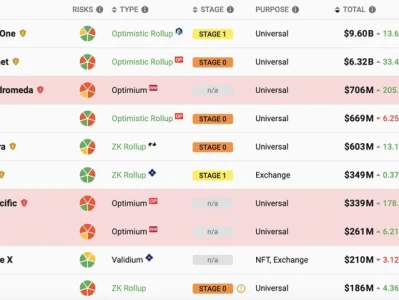
Okay, let's be real. This whole idea that DeFi is some kind of "safe haven" in the crypto world? Give me a freakin' break. I'm looking at this FalconX report, and it's basically a post-mortem on the October crash. Two out of 23 DeFi tokens are positive for the year? That ain't exactly confidence-inspiring, is it? Down 37% this quarter? DeFi Token Performance & Investor Trends Post-October Crash.

They're trying to spin this as "mixed price action reveals some nuances." Nuances? It's a bloodbath! The only nuance I see is how spectacularly these "decentralized" dreams are failing to live up to the hype. Remember when DeFi was supposed to be the future of finance? Turns out, it's just the same old casino, but with slightly fancier dice.

Investors: Running for the Exits (or Maybe Just the Buybacks)

So, what's the supposed bright spot here? Investors are "opting for safer names with buybacks." Oh, so the "safe haven" is… buying back your own damn tokens? That's like saying your restaurant is doing great because you keep eating there yourself. It's artificial demand, plain and simple.

And what about these "fundamental catalysts?" MORPHO and SYRUP outperformed because of "minimal impact from the Stream finance collapse" or "seeing growth elsewhere." Seriously? "Minimal impact from a collapse" is now a selling point? This is the crypto equivalent of celebrating that your house only partially burned down.

I mean, what kind of genius marketing is that? "Come invest with us, we only mostly avoided disaster!" Maybe I'm missing something... Nah.

Valuations: A Race to the Bottom?

The article then goes on to say that some DEXes are "cheaper" now relative to September. Okay, great. So, things were ridiculously overpriced before, and now they're just… less ridiculously overpriced. That's progress?

They point out that CRV, RUNE, and CAKE saw greater 30-day fees compared to September. Well, offcourse if the price drops faster than fees, the price-to-sales multiple compresses. It's like celebrating that your car is cheaper now that it's missing the engine.

Speaking of fees, who is even using these things? Are they really providing a valuable service, or are they just siphoning money from desperate retail investors who don't know any better?

I'm not saying all of DeFi is a scam, but let's be real, a whole lot of it feels like a house of cards waiting to collapse.

Lending: Crowding into a Burning Building

Here's where things get really twisted. The report claims that lending and yield names have "steepened on a multiples basis." In other words, they're more expensive relative to their fees.

The explanation? Investors are "crowding lending names in the selloff, considering lending and yield-related activity is often seen as stickier than trading activity in a downturn." So, the "safe haven" strategy is to pile into the one sector that's overvalued because people think it's "stickier"? That's like running into a burning building because you think the wallpaper is fire-resistant.

And the kicker? "Lending activity may even pick up as investors exit to stablecoins and seek yield opportunities." So, people are fleeing the volatility of crypto… to chase yield in stablecoins? That's the financial equivalent of trying to escape a hurricane by building a sandcastle.

It's a Clown Show, Folks

This whole DeFi situation is just one giant, slow-motion train wreck. They're trying to sell it as a "safe haven," but it's really just a bunch of overhyped, underperforming tokens propped up by buybacks and wishful thinking.

I'm not saying there's no value in DeFi. Maybe, maybe, there are a few genuinely innovative projects out there. But let's not pretend this is some kind of escape from the madness of the crypto market. It's just a different flavor of crazy. And honestly, I'm starting to think the whole damn thing is just a giant Ponzi scheme waiting to implode. Then again, maybe I'm the crazy one here.

DeFi Post-Crash: Investors Still Falling For It? (- Deep Dive!)

Blockchain related

DeFi Post-Crash: Investors Still Falling For It? (- Deep Dive!)

Avaxsignals Avaxsignals Published on2025-12-07 Views10 Comments0

Solana: Still Trying to Be a Thing in 2025?

Okay, let's be real. Solana's "utility" – that's what they're calling it now? Give me a freakin' break. Every crypto project slaps the word "utility" on their whitepaper like it's a get-out-of-jail-free card. "Oh, but Nate," the Kool-Aid drinkers will say, "Solana's got TPS! It's got DeFi! It's got... NFTs!" Yeah, so did my Tamagotchi in '97. Did that make it a sound investment? No, it made me a sucker for brightly colored plastic.

Solana's Tokenomics and Technology: A Critical Look

This whole article is about Solana’s network, adoption, historical performance, and tokenomics, right? As of late 2025, apparently. But let's cut the crap. Tokenomics is just fancy talk for "how we're gonna screw over the little guy." I mean, 16.23% to founders and team? 10.46% to early investors? Translation: The insiders get rich while you're left holding the bag when the next "market correction" (read: rug pull) happens.

And don't even get me started on their "combination of Proof of History (PoH) and Proof of Stake (PoS)." It's like they’re trying to impress us with jargon soup. It's supposed to "allow validators to process transactions more efficiently." Sure it does. Just like my grandma's "efficient" coupon clipping "allows" her to save 17 cents on cat food.

DeFi, NFTs, and Other Ways to Lose Your Shirt

So, Solana's got a booming DeFi ecosystem? Great. More ways for crypto bros to gamble with leverage and get rekt when the market sneezes. Lending, borrowing, and liquidity farming – sounds like a bunch of fancy words for "digital casino." DeFi Token Performance & Investor Trends Post-October Crash

Oh, and NFTs? Offcourse, Solana’s gotta have NFTs. Remember when those were supposed to revolutionize art and culture? Now they’re just pixelated JPEGs that prove you have more money than sense. And, hey, good news: NFT launches trigger TPS spikes! You know, the thing they’re always bragging about? So, basically, the entire network grinds to a halt so someone can sell a digital monkey for $1.2 billion. Makes perfect sense.

Regulatory Concerns and Market Influences

And the regulatory environment? Don’t even get me started. "SEC oversight affects DeFi participation and institutional investment." Translation: The only thing keeping this whole house of cards from collapsing is whether some government bureaucrat decides to crack down on it. And let’s be honest, that’s not exactly a rock-solid foundation.

The Price is Right... Until It Isn't

This article's got all the historical price milestones for Solana, right? Up, down, sideways... Who cares? The price is always "influenced by Bitcoin and Ethereum trends, macroeconomic conditions, and regulatory developments." So, basically, it's just along for the ride. You’re telling me that Solana's value is determined by things outside of Solana itself? I could’ve told you that.

They're trying to sell us on a "base" price range of $135-$160. What if it doesn't happen? What if Bitcoin tanks? What if the SEC decides to obliterate the entire DeFi sector? Then what? We’re supposed to believe that "sustained TPS, staking adoption, moderate macro stability" will save the day? I’m not buying it.

Then again, maybe I'm the crazy one here. Maybe Solana is the future of finance. Maybe I’m just too cynical to see the amazing potential. Nah. Give me a break.

Conclusion: Solana's Utility - A Mirage?

The Emperor Has No Clothes (and Neither Does Solana)

Solana's "utility" is a mirage. It's the same old crypto hype dressed up in shiny new tech buzzwords. The insiders get rich, the gamblers lose their shirts, and the rest of us are left wondering why we ever believed any of this nonsense in the first place. I'm out.

✔️ Final Title: Crypto Forecasts: Why the Numbers Don't Add Up (- Takeaways!)

Blockchain related

✔️ Final Title: Crypto Forecasts: Why the Numbers Don't Add Up (- Takeaways!)

Avaxsignals Avaxsignals Published on2025-12-06 Views9 Comments0

Crypto Regulation: A Patchwork Quilt?

The crypto world in 2025 is a fascinating mix of progress and persistent uncertainty. Global Crypto Policy Review Outlook 2025/26 Report, covering 30 jurisdictions and over 70% of global crypto exposure, paints a picture of stablecoins taking center stage, institutional adoption cautiously advancing, and a global push for consistent regulation. But is it truly consistent? Or are we looking at a regulatory patchwork quilt, stitched together with good intentions but riddled with holes?

Stablecoins Take Center Stage

Stablecoins, predictably, are the focus. Over 70% of the jurisdictions TRM Labs reviewed are working on stablecoin regulation. The US GENIUS Act and the EU's MiCA rollout are cited as examples, alongside progress in Hong Kong, Japan, Singapore, and the UAE. The implication is clear: stablecoins are seen as potential mediums of exchange, and regulators want bespoke frameworks to govern them. But here’s where the cracks start to appear. While most are advancing, what about the jurisdictions that are not prioritizing stablecoins? Are they simply lagging, or do they have fundamentally different views on the role of these assets? It's a question the report doesn't explicitly address.

Institutional Adoption: Proceed with Caution

The report highlights that about 80% of reviewed jurisdictions saw financial institutions announce digital asset initiatives in 2025. This is attributed to increasing regulatory clarity, particularly in the US, EU, and parts of Asia. But let’s dig a little deeper. "About 80%" is a broad statement. What kind of initiatives are we talking about? Are these small pilot programs, or large-scale deployments? And what's the actual volume of institutional investment? The report doesn’t provide concrete figures, leaving room for interpretation.

Basel Committee's Prudential Rules Under Reassessment

Furthermore, the Basel Committee's proposed prudential rules for banks' crypto exposures, initially slated for implementation by January 1, 2026, are now under reassessment. The original framework would have required full capital deductions for most crypto assets, including certain stablecoins on public blockchains. This is a major point. The potential softening of these rules suggests a more accommodating stance toward banks' engagement with digital assets. But does this represent a genuine shift in attitude, or simply a pragmatic response to the growing stablecoin market and the fact that major jurisdictions like the US and UK declined to adopt the original standards? Are regulators truly becoming more comfortable with the risks, or are they just bowing to market pressure?

Combating Illicit Finance Through Regulation

One area where regulation seems to be having a positive impact is in combating illicit finance. TRM analysis found that virtual asset service providers (VASPs), the most widely regulated segment of the crypto ecosystem, have significantly lower rates of illicit activity than the overall ecosystem. This is encouraging, and it underscores the importance of robust regulatory frameworks. However, as the report also points out, crypto's global and borderless nature makes consistency critical to preventing regulatory arbitrage. The North Korea hack on Bybit, which led to the exchange losing over USD 1.5 billion in Ethereum tokens, serves as a stark reminder of the vulnerabilities that exist when gaps in standards implementation persist.

The US GENIUS Act: Landmark Progress?

The report mentions the US leading an acceleration in crypto policymaking and friendlier regulatory attitudes toward digital assets in 2025. The GENIUS Act on stablecoins is cited as landmark progress. But the devil is always in the details. What exactly does the GENIUS Act entail? And how will it be implemented in practice? The report doesn’t delve into specifics, leaving the reader to wonder about the potential implications.

MiCA Implementation Challenges in the EU

I've looked at enough of these "year in review" reports to know that they often gloss over the less palatable truths. The report acknowledges that the implementation of MiCA in the EU has revealed the challenge of maintaining regulatory consistency across the bloc, but it doesn't fully explore the extent of the divergence or the potential consequences. If national authorities are interpreting and enforcing MiCA differently, what does that mean for the long-term viability of a unified European crypto market?

Is Global Consistency Just a Pipe Dream?

The FATF warns that "VASPs in jurisdictions with weak or non-existent frameworks" remain vulnerable to exploitation "without detection or disruption." The FSB cautions that "gaps and inconsistencies" in implementing standards could pose risks to financial stability and market resilience. These are serious concerns, and they raise a fundamental question: Is true global consistency in crypto regulation even achievable, given the diverse political, economic, and cultural contexts in which these regulations are being developed?

Maybe the real takeaway here isn't the progress that's been made, but the distance that still needs to be traveled. The crypto market is evolving at a breakneck pace, and regulators are struggling to keep up. The focus on stablecoins is understandable, but it shouldn't come at the expense of addressing other critical issues, such as DeFi, NFTs, and cross-border enforcement. The regulatory landscape in 2025 is undoubtedly more mature than it was a few years ago, but it's still far from perfect. It's a work in progress, and it remains to be seen whether it will ultimately provide the clarity and stability that the crypto market needs to thrive.

Decentralized Regulation?

The push for global consistency is admirable, but perhaps a touch naive. Expect more regulatory arbitrage and jurisdictional competition as nations vie for a piece of the crypto pie. The "patchwork quilt" might be here to stay.

Crypto Stabilization: The Data Discrepancy (Mind Blown!)

Blockchain related

Crypto Stabilization: The Data Discrepancy (Mind Blown!)

Avaxsignals Avaxsignals Published on2025-12-05 Views10 Comments0

Crypto Regulation: Deck Chairs on the Titanic?

Okay, so everyone's patting themselves on the back about crypto regulation finally "arriving." The reports are dropping, the conferences are happening, and the regulators are… well, regulating. But is it actually working, or are we just shuffling deck chairs on the Titanic 2.0?

The Illusion of Stablecoin Security

Stablecoins are the poster child for regulatory success, right? The TRM Labs report Global Crypto Policy Review Outlook 2025/26 Report crows about "stablecoins taking center stage" and regulators "acknowledging the importance of a bespoke regulatory framework." The US even passed the GENIUS Act. But let's pump the brakes for a second.

The S&P downgrade of Tether (mentioned in "Crypto Market Update: Bitcoin Price Slide Continues Despite Rising Open Interest") is a flashing red light. They cited "weaker reserve quality" and "rising exposure to secured loans and Bitcoin." Bitcoin! The whole point of a stablecoin is, you know, stability. If your stablecoin is backed by volatile assets, you're not solving the problem; you're just kicking the can down the road. Paolo Ardoino can huff and puff about "traditional finance propaganda," but the numbers don't lie. If Tether's reserves are shaky, the whole stablecoin house of cards could collapse. And that collapse, when it comes, will be blamed on lack of regulation, not the inherently flawed premise.

And the geographic fragmentation is a mess. The TRM report details how the US, EU, and parts of Asia are "catalysts for global institutional participation" due to "clear, innovation-friendly regulation." But then you've got places like the Seychelles ("Tightened VASP oversight with new licensing and supervision regime; cautious licensing approach and public warnings against unlicensed activity") cracking down. So, where does that leave us? A regulatory patchwork where firms shop for the friendliest jurisdiction, and the bad actors just go underground.

Questioning Institutional Crypto Adoption

The same TRM Labs report bangs the drum about "institutional adoption fueled by regulatory clarity." They claim about 80% of reviewed jurisdictions saw financial institutions announce digital asset initiatives in 2025. But "announce" isn't the same as "do." How many of those initiatives actually launched? How many are generating real revenue? How many are just PR stunts to look cutting-edge?

And let's be real: institutions aren't exactly diving headfirst into crypto out of the goodness of their hearts. They're doing it because there's money to be made. If the regulatory environment becomes too restrictive, they'll pull back faster than you can say "bear market." The Basel Committee's proposed capital deductions for crypto assets is a perfect example. The fact that the Committee is reassessing the rules (as mentioned in the TRM Labs report) shows that even the regulators themselves are realizing they might be killing the golden goose. I've looked at hundreds of these filings, and this kind of backpedaling usually means someone powerful is whispering in their ear.

The excitement around Texas becoming the first US state to publicly invest in Bitcoin is a case in point ("Crypto Market Enters a Stabilisation Phase, Experts Say"). It's "symbolic," sure. But it's also Texas, a state known for its… unique approach to financial regulation. Is that really the gold standard we should be aiming for?

The Bybit Hack: Exposing Systemic Vulnerabilities

The TRM Labs report mentions North Korea's record-breaking hack on Bybit, where the exchange lost over USD 1.5 billion in Ethereum tokens. They use this as a call for "better cross-jurisdictional coordination and real-time information sharing." But let's be blunt: that's not a solution; that's damage control.

The fact that a single hack can wipe out that much value highlights the fundamental vulnerability of the entire crypto ecosystem. No amount of regulation can completely eliminate the risk of human error, code vulnerabilities, or outright criminal activity. And even if we manage to catch the bad guys after the fact, the money's usually long gone.

And this is the part of the report that I find genuinely puzzling: The report highlights the growth of the Beacon Network, an industry information-sharing platform. That sounds great in theory, but it also means that the entire crypto ecosystem is increasingly reliant on a private platform for security. What happens when that platform gets hacked? Or when it starts censoring transactions it doesn't like? Are we just outsourcing regulation to the very industry we're trying to regulate?

The Illusion of Control Through Regulation

So, where does this leave us? We've got regulators patting themselves on the back, institutions dipping their toes in the water, and stablecoins teetering on the edge of collapse. The whole thing feels like an elaborate Kabuki dance, where everyone's pretending that regulation is solving the problem, when in reality, it's just creating an illusion of control.

The excitement about Japan preparing a 20 percent flat tax on crypto gains ("Crypto Market Update: Bitcoin Price Slide Continues Despite Rising Open Interest") is telling. It's not about protecting investors; it's about maximizing tax revenue. And that's fine—governments need to get paid. But let's not pretend it's anything more than that.

Looking Ahead: Will Reality Bite in 2026?

Maybe. Maybe not. But one thing's for sure: the current regulatory landscape is a far cry from the utopian vision of a decentralized, trustless financial system. It's a messy, fragmented, and often self-serving system that's just as vulnerable to manipulation and abuse as the old one.

The Ongoing Regulatory Theater

The crypto market is still the Wild West, just with slightly better costumes.